- Debunking 6 Persistent Travel Misconceptions in 2026
- 1. Travel is Exclusively for the Wealthy
- 2. Credit Cards are Detrimental to Financial Health for Travel Rewards
- 3. Sharing Economy Platforms Like Couchsurfing are Inherently Risky
- 4. Solo Female Travel is Unduly Hazardous
- 5. Overseas Employment for Travelers is Unattainable
- 6. Budget Travel is Solely for the Young and Unattached
In an increasingly interconnected world, where global exploration is more accessible than ever, a curious paradox persists: a significant portion of the population still harbors outdated beliefs about the nature of travel. Despite exponential advancements in technology, information sharing, and diverse travel options, deep-seated misconceptions continue to deter many from embarking on journeys that could enrich their lives profoundly. These myths, often perpetuated by historical narratives, media sensationalism, or a simple lack of current information, paint a picture of travel that is both prohibitively expensive and inherently dangerous. As we navigate the mid-2020s, it's crucial to dismantle these lingering fallacies and reveal the true landscape of modern exploration. The digital age, particularly by 2026, has democratized travel planning and execution. From hyper-personalized itinerary builders powered by AI to real-time safety advisories and a vibrant global community of travelers sharing their experiences, the resources available are unprecedented. Yet, the mental barriers remain formidable for many. This article aims to address and thoroughly debunk some of the most stubborn travel myths, offering a contemporary, informed perspective that aligns with the realities of global travel today.
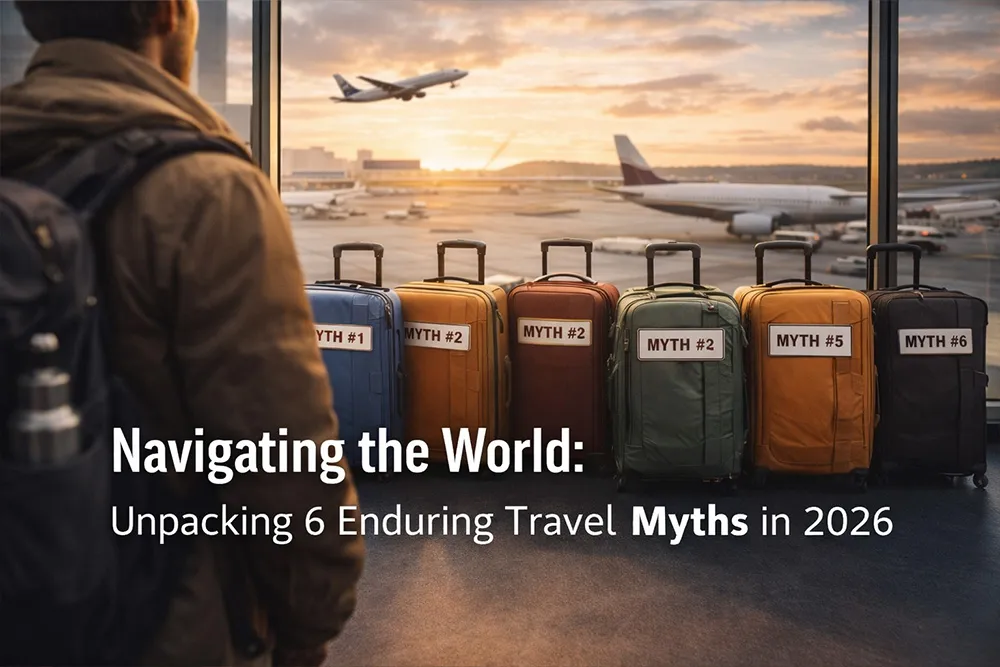
Debunking 6 Persistent Travel Misconceptions in 2026
1. Travel is Exclusively for the Wealthy
The notion that travel is a luxury reserved solely for the affluent is perhaps the most pervasive and damaging myth. While high-end resorts and first-class flights certainly exist, the modern travel landscape is replete with budget-friendly alternatives that make global exploration attainable for nearly any income bracket. The rise of low-cost carriers, particularly prominent in Europe and Asia, has made intercontinental flights surprisingly affordable. Furthermore, the sharing economy has revolutionized accommodation, offering hostels, guesthouses, and homestays that provide significant savings over traditional hotels. By 2026, platforms facilitating house-sitting, home exchanges, and even volunteer-for-lodging arrangements have become mainstream, enabling travelers to drastically reduce their expenses. Strategic planning, flexibility with dates, and a willingness to embrace local experiences over tourist traps are key. It’s not about how much money you have, but how creatively and efficiently you manage your resources.
2. Credit Cards are Detrimental to Financial Health for Travel Rewards
A common fear is that utilizing travel credit cards for rewards will inevitably lead to debt and a damaged credit score. This misconception overlooks the strategic financial benefits that responsible credit card use can unlock. In 2026, travel rewards programs are more sophisticated and lucrative than ever. By channeling everyday expenses—groceries, utilities, fuel—through a carefully chosen travel card and paying the balance in full each month, individuals can accrue significant points and miles. These rewards translate directly into free flights, hotel stays, and even upgrades, substantially reducing the cost of travel. While a new credit card application can cause a minimal, temporary dip in one's credit score, consistent on-time payments and a healthy credit utilization ratio actually bolster one's financial standing over time. For the financially disciplined, travel credit cards are powerful tools for maximizing travel opportunities without incurring debt.
3. Sharing Economy Platforms Like Couchsurfing are Inherently Risky
The idea of staying with strangers via platforms like Couchsurfing often triggers immediate concerns about safety. However, this perspective largely ignores the robust community-driven safety mechanisms embedded within these platforms. Much like established rental services, Couchsurfing and similar platforms rely heavily on comprehensive user profiles, verifiable references, and a transparent review system. Hosts and guests alike are rated and reviewed, creating a self-regulating ecosystem where accountability is paramount. By 2026, these platforms have further integrated advanced verification processes, identity checks, and even optional insurance coverages, enhancing user confidence. While exercising common sense, trusting one's instincts, and thoroughly vetting profiles remain crucial, the vast majority of interactions on these platforms are positive, fostering unique cultural exchanges and genuine connections that traditional travel often misses.
4. Solo Female Travel is Unduly Hazardous
Media portrayals and anecdotal warnings often paint solo female travel as an exceptionally dangerous endeavor, implying that women are inherently more vulnerable abroad. While it is true that women may face specific challenges and should always prioritize safety, this myth drastically overstates the risks and discourages countless women from experiencing the freedom and empowerment of independent travel. The reality is that personal safety is a concern for all travelers, regardless of gender, and the vast majority of journeys occur without incident. By 2026, a burgeoning global community of solo female travelers actively shares advice, safety tips, and destination-specific insights through blogs, social media, and dedicated forums. Advances in personal safety technology, from discreet tracking apps to portable alarms, also offer added layers of security. With proper research, awareness of local customs, and a proactive approach to personal safety, solo female travelers can confidently explore the world, often finding destinations far safer than their own hometowns.
5. Overseas Employment for Travelers is Unattainable
The belief that securing work abroad is an insurmountable bureaucratic hurdle, requiring specialized skills and extensive visa processes, is increasingly outdated. While some roles do demand specific qualifications, the landscape of global employment for travelers has diversified significantly. By 2026, the rise of digital nomad visas in numerous countries has streamlined the process for remote workers seeking to live and work abroad. Beyond this, opportunities such as teaching English (both online and in-person), au pair positions, seasonal work in tourism and hospitality, and volunteering for room and board (e.g., through WWOOF or Workaway) are widely available. These roles may not always offer high salaries, but they provide invaluable cultural immersion, cover living expenses, and extend travel horizons. Flexibility, a willingness to learn, and an open mind are often more crucial than a traditional resume in securing these types of transient, travel-enabling jobs.
6. Budget Travel is Solely for the Young and Unattached
This myth suggests that once individuals are past their youth, have families, or are in committed relationships, budget travel becomes impossible or undesirable. This couldn't be further from the truth. While backpacking might conjure images of young individuals, the reality in 2026 is that budget-conscious travel strategies are embraced by people of all ages and family structures. Many seniors are opting for extended trips, utilizing long-term stay discounts, house-sitting opportunities, or even RV travel to explore extensively without breaking the bank. Families, too, are discovering creative ways to travel affordably, from leveraging loyalty programs and self-catering accommodations to homeschooling on the road and utilizing family-friendly hostels. The core principles of budget travel—smart planning, seeking value, and embracing local life—are universal and adaptable, proving that age or relationship status is no barrier to experiencing the world on a reasonable budget. The enduring power of these travel myths often stems from a lack of current information and a reliance on outdated perceptions. In 2026, the world is more connected, diverse, and accessible than ever before. By dispelling these common misconceptions, we hope to empower more individuals to look beyond the perceived limitations and embrace the transformative power of global travel, proving that adventure, discovery, and cultural exchange are within reach for everyone.