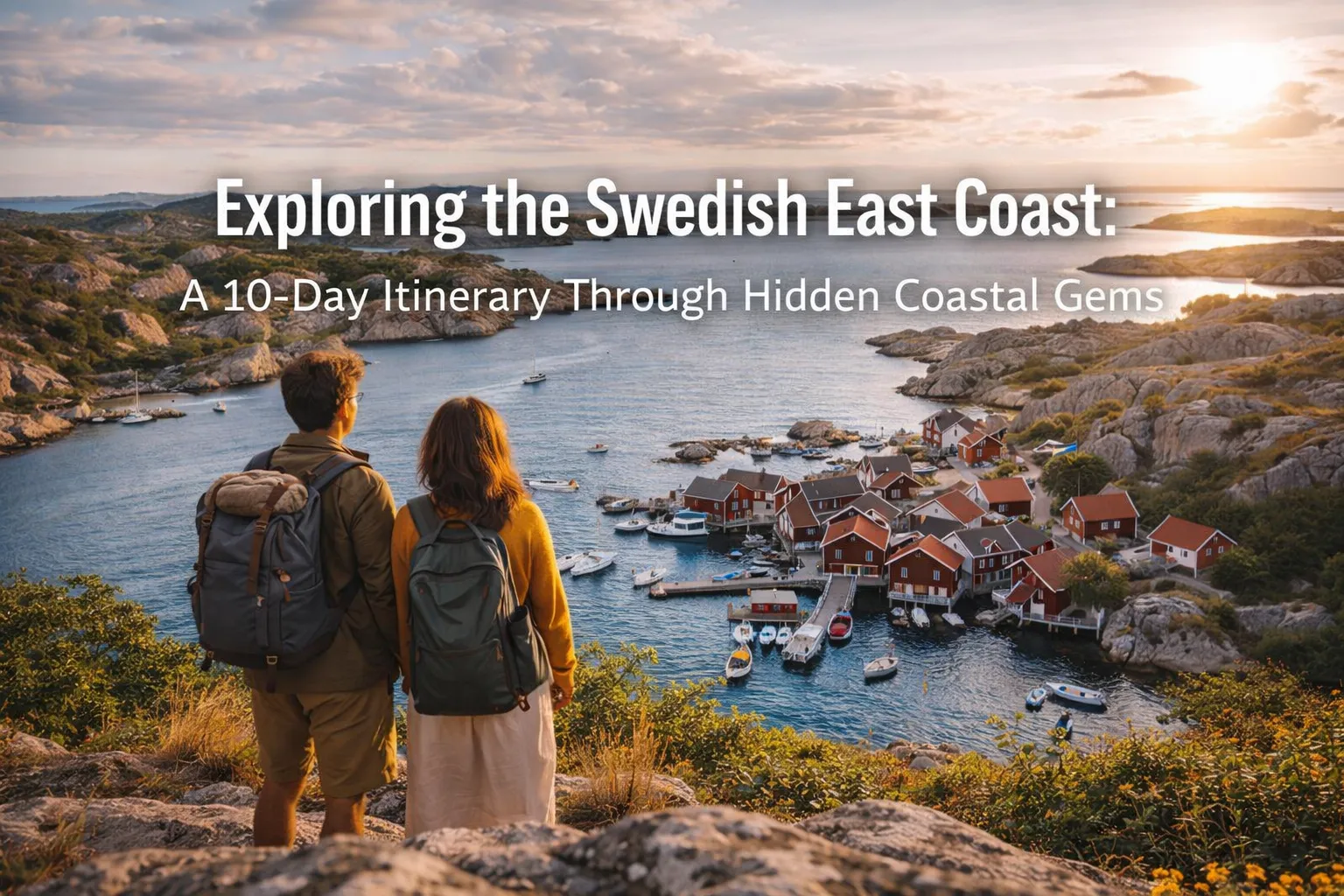
While Stockholm often captures the international spotlight, the true essence of Swedish summer resides along its expansive eastern coastline. As we move through 2026, travelers are increasingly seeking "slow travel" experiences that prioritize deep immersion over frantic sightseeing. The route stretching from the academic halls of Uppsala to the subarctic reaches of Luleå offers a profound look at a nation defined by its relationship with the Baltic Sea.
This journey is not merely about moving between coordinates; it is an exploration of changing light, geological drama, and the transition from urban sophistication to raw wilderness. By utilizing Sweden’s modernized electric rail network or sustainable car rentals, visitors can witness the landscape evolve from rolling hills to the dramatic cliffs of the High Coast.
1. The Academic and Ancient Heart: Uppsala
Located just north of the capital, Uppsala serves as the perfect entry point for those wishing to understand Sweden’s intellectual and spiritual foundations. As the country’s fourth-largest city, it pulses with the energy of a massive student population, ensuring that its historic streets remain vibrant and affordable. In 2026, the city continues to blend its 15th-century university heritage with a forward-thinking culinary and nightlife scene.
The Uppsala Cathedral remains a mandatory stop. As Scandinavia’s largest ecclesiastical structure, its Gothic spires dominate the skyline, housing the remains of monarchs and world-renowned scientists like Carl Linnaeus. For a deeper dive into the past, Gamla Uppsala offers a hauntingly beautiful landscape of Viking burial mounds that date back centuries, providing a tangible link to the Iron Age.
Nature lovers should not overlook the Linnaeus Garden. This meticulously reconstructed 18th-century teaching garden offers a serene escape while showcasing the botanical classification systems that changed modern science. The city’s layout encourages walking, with the Fyris River providing a picturesque backdrop for afternoon strolls through the university district.
2. Sundsvall: The Architectural Resilience of the Stone City
Continuing northward, the landscape shifts as you reach Sundsvall, a city that stands as a monument to resilience. Known as Stenstaden (the Stone City), its center was entirely rebuilt in stone following a devastating fire in the late 19th century. The result is one of the most elegant urban environments in northern Europe, characterized by grand facades and wide avenues designed to prevent future conflagrations.
The city serves as a bridge between industrial history and outdoor recreation. Kulturmagasinet, a cultural hub housed in converted harbor warehouses, offers a sophisticated look at the region’s timber-funded prosperity. For those traveling with families in 2026, the Himlabadet Water Park remains a premier destination, featuring advanced surfing simulators and relaxation zones.
For a panoramic perspective, a short trip to Norra Berget provides an open-air museum experience with historic wooden structures and views that stretch across the Gulf of Bothnia. If you have an extra afternoon, the nearby Alnön Island offers volcanic geological features and sandy beaches that are a favorite for local summer retreats.
3. The UNESCO High Coast: Geological Drama and Skuleskogen
The High Coast (Höga Kusten) is arguably the most visually stunning segment of the Swedish shoreline. This UNESCO World Heritage site is famous for having the highest "isostatic rebound" in the world—land that is still rising after being crushed by prehistoric glaciers. The result is a dramatic coastline where granite mountains plunge directly into the sea.
Skuleskogen National Park is the crown jewel of this region. Spanning over 7,000 acres, it offers a labyrinth of trails through ancient forests and coastal marshes. The most iconic feature is Slåttdalsskrevan, a massive vertical crevice that cuts through the mountain. While access points have been updated for safety in recent years, the view from the northern approach remains one of the most photographed spots in the country.
For those based in the nearby town of Örnsköldsvik, the High Coast Trail provides varying levels of difficulty for hikers. Whether you are seeking a multi-day trek or a simple afternoon kayak trip through the archipelago, the region emphasizes a "leave no trace" philosophy that is central to Swedish environmental ethics in 2026.
4. Umeå: The Northern Cultural Powerhouse
Umeå is a city defined by its youth and its birch trees. As a major university hub, nearly a third of its residents are students, creating a progressive atmosphere that feels distinct from the more traditional coastal towns. This "City of Birches" was a European Capital of Culture for a reason, and its commitment to the arts is visible on every corner.
A visit to Guitars – The Museum is essential, even for those who aren't musicians. It houses one of the world’s most significant private collections of vintage instruments, primarily from the golden age of rock and roll. Meanwhile, Kulturväven, the city’s striking riverside cultural center, integrates a library, cinema, and art galleries into a single architectural masterpiece.
Outdoor enthusiasts should explore the Umedalen Skulpturpark, where world-class art is integrated into a serene parkland setting for free. The city’s proximity to the Strömbäck-Kont nature reserve also allows for quick transitions from urban cafes to quiet pine forests and secluded swimming coves, perfect for those long summer days when the sun barely sets.
5. Luleå: The Gateway to the Subarctic Archipelago
The final major destination on this coastal odyssey is Luleå, a city that sits just below the Arctic Circle. This is where the Swedish "north" truly begins, offering a landscape of over 1,300 islands and a unique cultural heritage. The light here during the summer months is ethereal, providing nearly 24 hours of visibility for exploration.
The historical highlight is Gammelstad Church Town, a UNESCO site featuring over 400 red wooden cottages surrounding a 15th-century stone church. These cottages were built to house parishioners who traveled from afar, and today they offer a perfectly preserved window into rural Swedish life. It is an essential stop for anyone interested in the social history of the northern regions.
Luleå’s archipelago is best experienced by boat or kayak. Islands like Kluntarna offer unique flora and fauna, alongside ancient stone labyrinths left by early mariners. In the city itself, the harbor district has evolved into a culinary hotspot, with restaurants like Bistron focusing on locally sourced ingredients from the Norrbotten region, such as reindeer, Arctic char, and cloudberries.
Essential Travel Considerations for 2026
Traveling the Swedish East Coast is most rewarding when done with flexibility. While the national rail system is efficient, reaching the specific trailheads of the High Coast or the remote corners of the Luleå archipelago often requires a vehicle. Sustainability is a major theme in 2026; look for electric vehicle charging stations which are now ubiquitous even in smaller northern towns.
When packing, remember that the "never-ending light" of the Swedish summer can be deceptive. Even in July, northern evenings can be brisk. Layering remains the gold standard for Swedish travel. Finally, embrace the concept of Allemansrätten (the Right of Public Access), which allows you to roam freely in nature, provided you respect the land and the privacy of local residents.