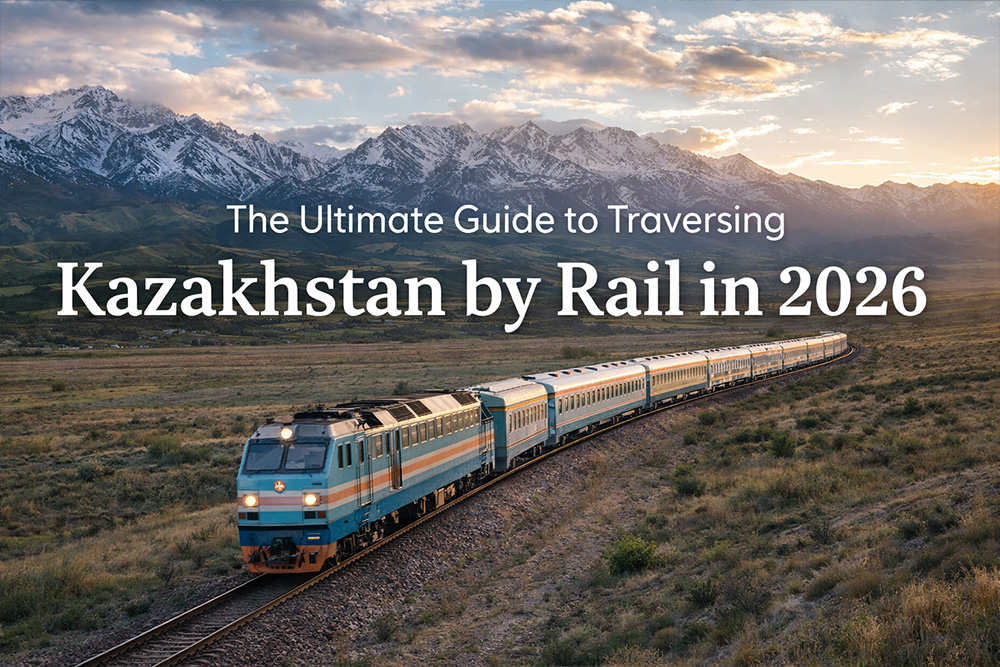
Traveling across Kazakhstan is an exercise in understanding scale. As the world’s ninth-largest nation, its vast landscapes are best navigated not by air, but via its extensive and historic railway network. In 2026, the rail system remains the lifeblood of the country, offering a window into the soul of the Great Steppe that no flight can replicate. The experience of a Kazakh train journey is a blend of Soviet-era nostalgia and rapid modernization. It is a social ecosystem where strangers become friends over shared tea and the rhythmic clatter of steel on iron. For the modern traveler, it represents one of the few remaining authentic "slow travel" adventures left in Central Asia.
Decoding the Carriage Classes: From Talgo to Platzkar
Understanding the hierarchy of Kazakh trains is essential for planning a successful trip. The fleet is divided into three distinct categories, each offering a different balance of speed, comfort, and cultural immersion.
The Talgo (Premium Fast Trains): These Spanish-designed trains are the flagship of the national carrier, Kazakhstan Temir Zholy (KTZ). They are significantly faster than older models and feature modern amenities, including vacuum toilets and improved climate control. While more expensive, they are the preferred choice for business travelers and those on a tight schedule.
Kupe (Standard Four-Berth): The classic choice for long-haul journeys, a Kupe compartment consists of four bunks (two upper, two lower) behind a locking door. It provides a high level of privacy and is ideal for small groups or families. In 2026, many of these carriages have been refurbished to include power outlets and updated bedding.
Platzkar (Open Dormitory): For the truly adventurous or budget-conscious, the Platzkar is an open-plan carriage with 54 bunks. There are no doors, creating a communal atmosphere. While less private, it is often considered safer for solo female travelers because of the constant presence of others. It is the best way to experience the legendary hospitality of the Kazakh people.
Essential Logistics and 2026 Booking Systems
The digital infrastructure for Kazakh railways has seen significant upgrades. By 2026, the vast majority of travelers book their journeys through the official KTZ mobile app or web portal. These platforms now support international credit cards and offer a seamless English-language interface. While digital tickets are standard, it is vital to keep a digital copy or a printout of your QR code. At major hubs like Astana and Almaty, automated kiosks allow for quick ticket printing if required. For those who prefer a human touch, station ticket offices (Kassa) still operate, though writing your destination and date on a piece of paper remains a helpful tip for overcoming language barriers. Pricing remains remarkably affordable. An overnight journey covering over a thousand kilometers often costs less than a standard meal in Western Europe. However, demand for popular routes—especially those connecting the northern and southern capitals—can be high, making it wise to book at least two weeks in advance during the peak summer season.
Life Onboard: The Unwritten Rules of the Rails
Life inside a Kazakh train carriage follows a specific set of social norms. To blend in and enjoy the journey, travelers should be aware of the "train kit" culture. Most locals immediately change into comfortable clothing, such as tracksuits and plastic sandals, upon boarding. Every carriage is equipped with a samovar—a large boiler providing constant hot water. This makes instant tea, coffee, and noodles the primary sustenance for long trips. Sharing food is a cornerstone of the experience; it is common for neighbors to offer bread, fruit, or sweets. Accepting these gestures with a smile is the fastest way to build rapport. Practicality is key. Toilets in older trains are typically locked when approaching and sitting in stations, so timing your visits is important. Additionally, if you prefer to lounge during the day, booking an upper bunk is strategic, as the lower bunks serve as communal seating areas for all passengers in the compartment during daylight hours.
Seven Must-Visit Hubs Along the Railway
The rail network connects the country’s most significant cultural and natural landmarks. Here are seven essential stops for any comprehensive 2026 itinerary:
- Almaty (The Southern Metropolis): The former capital remains the country's cultural heart. Nestled at the foot of the Trans-Ili Alatau mountains, it offers a sophisticated blend of European-style cafes, leafy boulevards, and easy access to high-altitude adventures at Medeu and Shymbulak.
- Astana (The Futuristic Capital): A stark contrast to Almaty, the current capital is a showcase of bold, 21st-century architecture. From the tent-shaped Khan Shatyr to the iconic Bayterek Tower, the city rises out of the steppe like a sci-fi mirage.
- Turkistan (The Spiritual Center): Home to the magnificent Mausoleum of Khoja Ahmed Yasawi, this city is the crown jewel of Kazakhstan’s Silk Road heritage. Recent investments have transformed Turkistan into a major tourism hub with world-class facilities surrounding its ancient core.
- Karaganda (A Window into History): Once a major center of the Soviet industrial machine, Karaganda offers a sobering look at the past. It serves as the gateway to the Dolinka museum, located on the site of a former labor camp, providing essential context for the region’s 20th-century history.
- Lake Burabay (The Northern Retreat): Often called the "Switzerland of Kazakhstan," this region features pine forests and dramatic rock formations. It is a refreshing escape from the heat of the steppe and is easily accessible via a short train ride from Astana.
- Aktau (The Caspian Gateway): For those heading to the far west, Aktau offers a unique seaside experience. This desert city on the Caspian Sea is the jumping-off point for exploring the otherworldly landscapes of the Mangystau region, known for its underground mosques and chalk mountains.
- Lake Balkhash (The Dual-Water Wonder): This massive lake is unique for being half-freshwater and half-saltwater. A stop here during the summer months allows for a relaxing break at various lakeside resorts, offering a different perspective on the Kazakh landscape.
Seasonal Considerations and Cross-Border Travel
Timing is everything when planning a rail journey through the steppe. The window from late May to early October is ideal, as the weather is generally warm and the landscapes are vibrant. Winters in the north are notoriously harsh, with temperatures frequently dropping below -30°C, which can occasionally lead to rail delays due to heavy snow. In 2026, Kazakhstan serves as a pivotal hub for Central Asian exploration. The rail lines extend seamlessly into neighboring Uzbekistan and Kyrgyzstan. Travelers can easily transition from the Kazakh rail system to the high-speed Afrosiyob trains in Uzbekistan or take bus connections from Almaty into the mountain valleys of Kyrgyzstan. Visa-free regimes for many nationalities have simplified these cross-border transitions. However, always verify the current entry requirements for 2026, as regulations can shift. Whether you are chasing the ghosts of the Silk Road or the futuristic skyline of the north, the trains of Kazakhstan remain the most evocative way to witness the transformation of this Central Asian giant.